
Home Improvement Financing for Major Exterior Repairs and Renovations: A Comprehensive Guide
As Home Improvement Financing for Major Exterior Repairs and Renovations takes center stage, this guide welcomes readers into the world of financing for home projects, shedding light on common obstacles and successful strategies.
Explore the various financing options available and factors influencing decisions, along with best practices for securing the necessary funds.

When it comes to financing major exterior repairs or renovations, homeowners often face a variety of challenges that can impact their ability to complete projects successfully.One common obstacle is the limited access to funds. Home improvement projects can be costly, especially when it comes to major repairs or renovations such as roof replacements or siding updates.
Limited financial resources can restrict homeowners from moving forward with these projects, leading to delays or incomplete work.Budgeting and financial planning play a crucial role in home improvement projects. Without a clear budget and financial plan in place, homeowners may struggle to determine the feasibility of their desired repairs or renovations.
Lack of proper planning can result in overspending, incomplete projects, or the use of subpar materials, all of which can have long-term negative consequences.
Limited access to funds can significantly impact the decision-making process for exterior home improvement projects. When homeowners do not have sufficient financial resources, they may be forced to compromise on the quality of materials used, delay necessary repairs, or even abandon projects altogether.
This can lead to further damage to the home and potentially higher costs in the long run.
Effective budgeting and financial planning are essential for the success of exterior home improvement projects. By creating a detailed budget that Artikels all expenses and income sources, homeowners can better assess their financial situation and make informed decisions about their projects.
Financial planning also helps homeowners prioritize repairs or renovations based on urgency and available funds, ensuring that the most critical work is completed first.

When it comes to financing major exterior home repairs and renovations, homeowners have several options to choose from. Each type of financing has its own set of benefits and drawbacks, so it’s important to understand the differences to make an informed decision.
Here, we will explore various financing options such as personal loans, home equity loans, home equity lines of credit, and government programs, and discuss successful financing strategies used by homeowners for major renovation projects.
Personal loans are a common way to finance home improvement projects. These loans are typically unsecured, meaning they do not require collateral. While personal loans may have higher interest rates compared to secured loans, they offer the flexibility of using the funds for any purpose.
Homeowners with good credit scores may qualify for favorable terms and quick access to funds.
Home equity loans allow homeowners to borrow against the equity in their home. This type of financing typically offers lower interest rates compared to personal loans, as the home serves as collateral. Home equity loans provide a lump sum payment that can be used for large renovation projects.
However, missing payments could result in the loss of the home.
HELOCs are similar to home equity loans but operate as a revolving line of credit. Homeowners can borrow against their home’s equity as needed, making it a flexible financing option for ongoing or unpredictable costs. HELOCs typically have variable interest rates and may require a minimum draw period before repayment begins.
Government programs, such as FHA Title I loans or energy-efficient mortgages, offer special financing options for specific types of home improvements. These programs may have lower interest rates or provide financial assistance to eligible homeowners. However, qualification requirements and restrictions may apply.
One successful financing strategy used by homeowners is to combine multiple financing options. For example, a homeowner may use a personal loan for immediate repairs and a home equity loan for larger renovation projects. By leveraging different financing sources, homeowners can access the funds they need while minimizing costs and risks.
When homeowners decide to finance major exterior repairs or renovations, several key factors come into play that influence their choice of financing options. Factors such as interest rates, credit scores, loan terms, and eligibility requirements can all impact the financing process.
Additionally, economic conditions and market trends can also play a significant role in determining the availability of financing for home improvement projects.
Interest rates are a crucial factor that homeowners consider when choosing a financing option for exterior repairs or renovations. Higher interest rates can significantly increase the overall cost of the project, while lower interest rates can make financing more affordable.
Homeowners often shop around for the best interest rates to ensure they are getting a competitive deal.
Credit scores play a vital role in the financing process, as they determine the borrower’s creditworthiness. A higher credit score can lead to better loan terms, lower interest rates, and higher borrowing limits, making it easier for homeowners to secure financing for their projects.
On the other hand, a lower credit score may limit the financing options available and result in higher costs.
The loan terms and eligibility requirements set by lenders can also influence homeowners’ financing decisions. Longer loan terms may result in lower monthly payments but can lead to higher overall costs due to interest. Additionally, strict eligibility requirements may limit the number of homeowners who qualify for certain financing options, affecting their decision-making process.
Economic conditions and market trends can have a significant impact on the availability of financing for home improvement projects. During economic downturns, lenders may tighten their lending criteria, making it more challenging for homeowners to secure financing. Conversely, in a robust economy, lenders may offer more favorable terms and lower interest rates to attract borrowers.
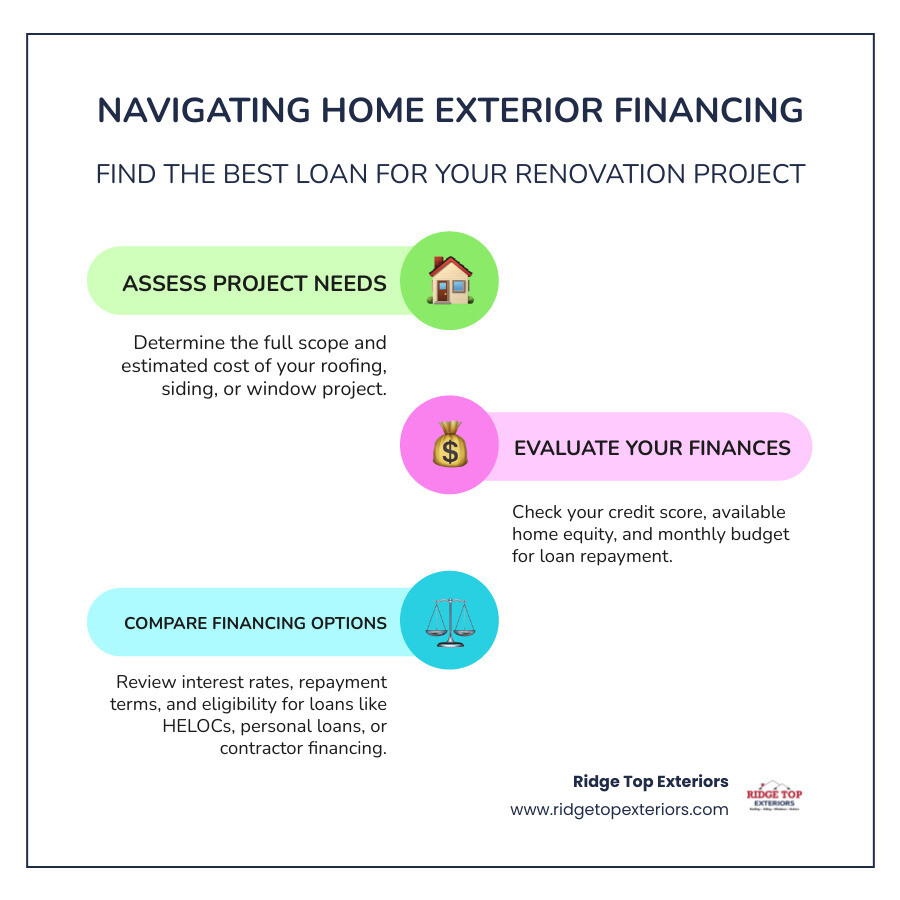
When embarking on major exterior repairs or renovations, securing financing is a crucial step for homeowners. By following best practices, homeowners can increase their chances of obtaining the necessary funds to complete their projects successfully.
What are the common obstacles homeowners face when seeking financing for major exterior repairs or renovations?
Common obstacles include limited access to funds, high interest rates, and strict eligibility requirements.
What types of financing options are available for exterior home improvements?
Various options include personal loans, home equity loans, home equity lines of credit, and government programs.
How can homeowners improve their chances of securing financing for major renovation projects?
Homeowners can improve their chances by preparing a comprehensive budget, gathering necessary documentation, and comparing different financing options.